 MyAAGrapevines.Com - Alcohol Posters
Alcohol Abuse Posters & Pictures — 280 historic images • Temperance to AA • 1830s-1945
Throughout history, society's relationship with alcohol has been complex—marked by periods of acceptance, concern, and reform. Visual culture has always played a critical role in shaping public perception, from early temperance movements to modern recovery programs. This article traces the evolution of alcohol abuse imagery in America, examining how posters, broadsides, and photographs have been used as tools for advocacy, education, and support. Through over 280 historic images, we explore how visual media influenced attitudes toward alcohol from the 1830s to the mid-20th century.
The Temperance Era (1830s–1919)
The Temperance Era (1830s–1919) marked the beginning of a nationwide campaign against alcohol consumption. Reformers, alarmed by the social and economic consequences of excessive drinking, created a wealth of visual material to support their cause. Posters and broadsides from this period feature dramatic warnings about the perils of alcohol, often depicting ruined families, wasted wages, and the descent into poverty. The Women's Christian Temperance Union (WCTU), one of the most influential groups, organized white-ribbon marches and published striking images of women and children affected by alcohol abuse. The Sons of Temperance issued certificates and pledges, while Father Mathew's movement promoted abstinence through personal commitment. Scientific Temperance charts used data and infographics to educate the public, and the Anti-Saloon League commissioned lithographs that helped sway public opinion toward Prohibition. These artifacts reveal the persuasive power of imagery in social reform.
Prohibition & Speakeasy (1920–1933)
The enactment of Prohibition in 1920, following the ratification of the 18th Amendment, marked a dramatic shift in American society. Official government posters promoted the virtues of sobriety and the legal consequences of violating Prohibition laws. At the same time, a vibrant underground culture emerged, immortalized in photographs and artwork depicting speakeasies, flappers, and jazz-fueled parties. Secret bars with peephole doors and hidden entrances became central to the nightlife of the Roaring Twenties. Images from this era show midnight car rides—so-called "midnight coupes"—used to transport alcohol, as well as daring raids by law enforcement on clandestine stills and bars. This visual record captures the clash between legal authority and public defiance, as well as the enduring allure of rebellion and glamour associated with the era's underworld.
AA Origins (1934–1945)
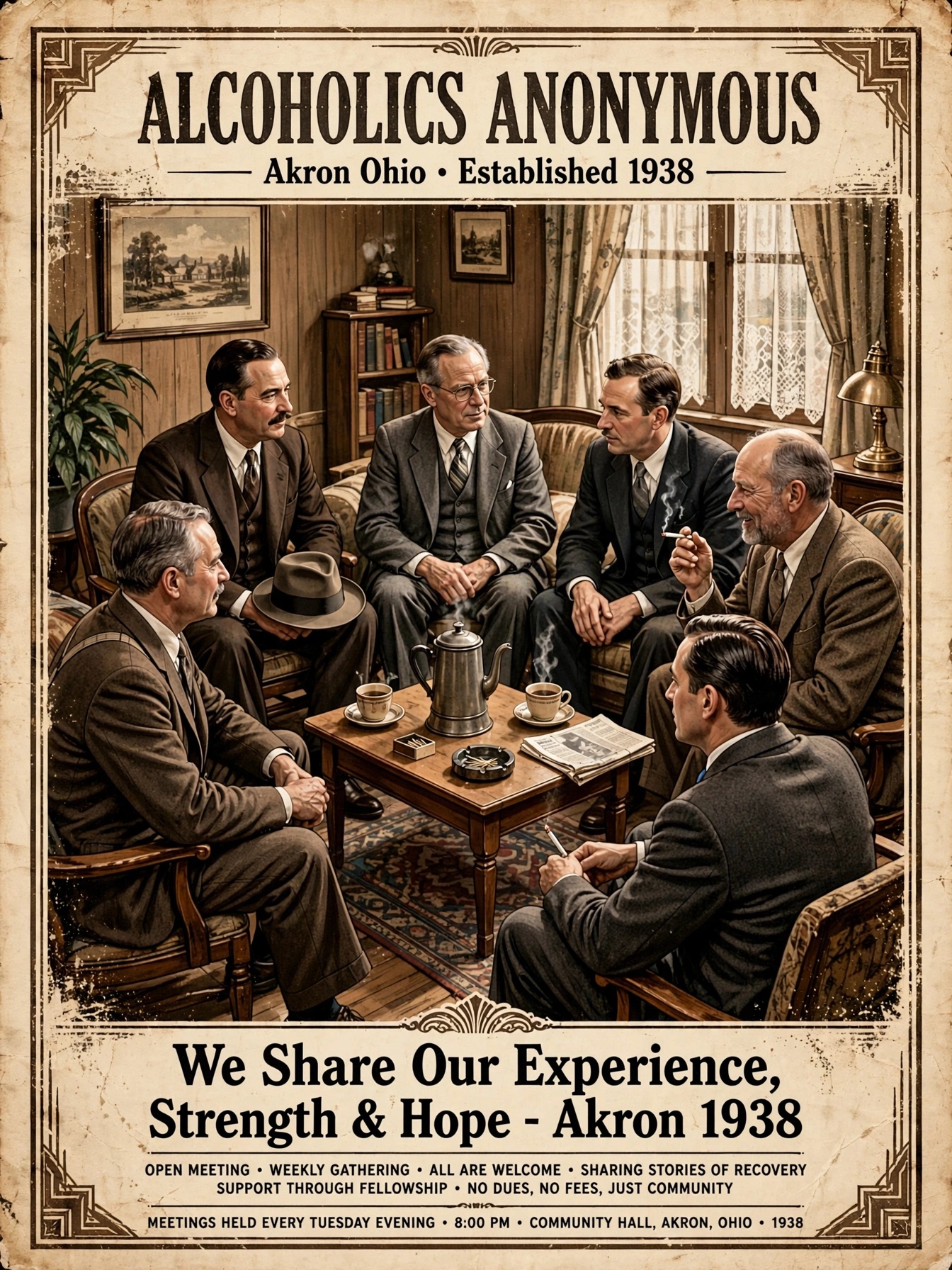
The founding of Alcoholics Anonymous (AA) in the 1930s signaled a new approach to alcohol abuse—one centered on mutual support and personal recovery. Photographs from this period capture the historic 1935 meeting between Bill Wilson and Dr. Bob Smith in Akron, Ohio, where the first kitchen-table discussions about alcoholism as an illness took place. These early pioneers, inspired by the Oxford Group and their Four Absolutes, developed key tenets such as "First Things First" and "Carry the Message." The writing of the AA "Big Book" in 1939 provided a blueprint for recovery that would spread worldwide. Posters and literature from these early years emphasize hope, community, and the possibility of transformation, offering a stark contrast to the punitive and moralistic tone of earlier temperance materials.
Legacy
Today, the collection of 280 images from the temperance movement to the dawn of AA stands as a testament to the enduring power of visual storytelling. These posters, broadsides, and photographs not only document the evolution of American attitudes toward alcohol but also provide insight into the broader cultural currents of their times. Researchers, educators, and the public are invited to explore the collection, which is preserved in the /www/images/alcohol_abuse_posters_and_pictures/ directory. By studying these artifacts, we can better understand how visual media has shaped both the stigma and the solutions surrounding alcohol abuse—a legacy that continues to inform public health and recovery movements today.