1960s — Global Expansion, Spot-Color, and a Fellowship Grows Up
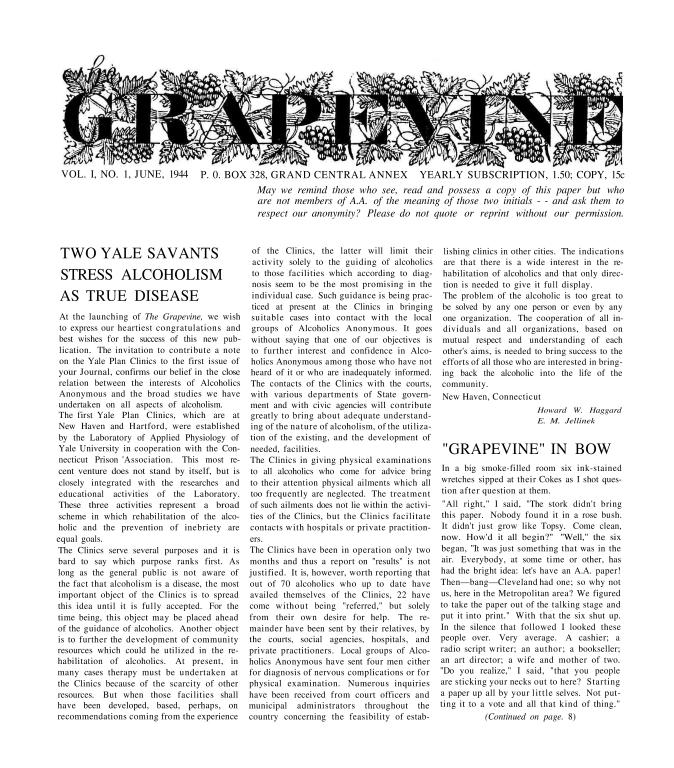
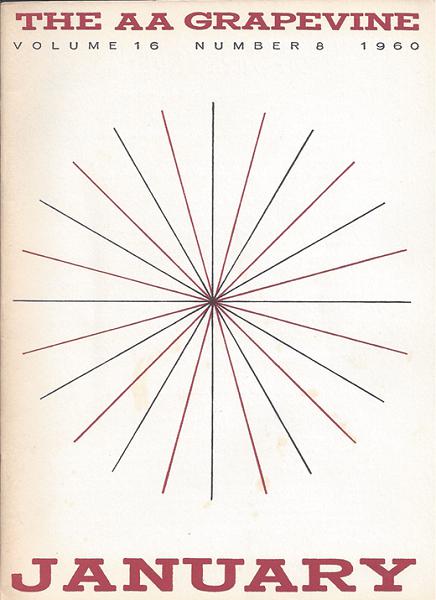
When the 1960s opened, AA was no longer the fragile experiment of 1944. Membership doubled from roughly 150,000 to over 300,000, and Grapevine circulation pushed past 50,000. Covers shifted from crisp New Yorker-style line art to bold spot-color, mod illustration, and first photographic experiments. If the 1950s made AA respectable in America, the 1960s proved sobriety translates across language, race, and continent.
A Fellowship That Outgrew America
Three countries dominate the correspondence: Japan, Mexico, and South Africa. In Japan, AA had taken hold through American servicemen and returnees. By 1961-1963 the Grapevine published stories in translation — members in Tokyo describing family shame, workplace drinking rituals, and reshaping the Steps without a Christian confessional tradition. Covers like 1961-06 and 1962-09 abandon the suburban living room for brushstroke landscapes.
Mexico's growth was explosive. From 1960, letters from Mexico City, Monterrey, and Juarez ask for Big Books. Grapevine reports in 1964-1965 describe members driving across the border with boxes of books. Those runs are the direct root of La Viña; guest Spanish pages appear as early as 1963-64, though La Viña as a dedicated edition would not launch until 1996.
South Africa offers the most sobering letters. Under apartheid, groups in Johannesburg and Cape Town write in coded language about meetings that crossed the color line. Issues 1963-11 and 1965-04 never use the word apartheid but describe “two groups that became one.” It is quiet, brave writing and the first time international politics enters the magazine.
The Look: Spot-Color and Pop
Grapevine could not afford four-color process, but mastered spot-color: black plus one saturated ink — mustard yellow in 1960-62, teal in 1963-65, burnt orange in 1966-69. Covers like 1962-08 or 1967-05 use a single orange circle behind a bench to do more than a photo could.
Art embraces Pop and Op Art. Early covers are witty — a martini glass that is also a fishhook. By mid-decade you get concentric circles, melting phones, distorted faces. Editorials in 1964-02 and 1966-07 say the goal was to reach younger alcoholics — students, secretaries, musicians — who did not see themselves in gray-flannel 1950s stories.
Governance in Print: The General Service Conference 1966
The most important AA event of the decade rarely made the cover but filled inside pages for two years. In 1966 the first General Service Conference convened after a twelve-year trial, making the Third Legacy — Service — concrete. Bill W. serialized what would become the Service Manual and Twelve Concepts for World Service in Grapevine 1965-68. Issues 1966-07 and 1967-04 read like conference minutes with ashtrays and coffee, people learning to disagree without drinking. That unglamorous work created the service structure that holds today's fellowship together.
Convention Minis — Long Beach 1960 and Toronto 1965
Two Internationals anchor memory. The 25th Anniversary in Long Beach in 1960 drew 13,000. Grapevine handed out a rare 4x5 inch mini — indexed as 1960-07 mini — with a sketch of the auditorium and a letter from Bill.
The 1965 International in Toronto drew 10,000 from 55 countries. Its mini — bilingual English-French with a red maple leaf spot-printed in a second pass — is cataloged as 1965-07 mini. Because the office reprinted both minis and sold them through 1966, many indexes list Long Beach and Toronto minis under 1966. They are pocket-sized, stapled, meant for Greyhound rides home, and ancestors of today's commemoratives. Search YYYY-MM mini to find them beside regular issues.
Toward Daily Reflections and Emotional Sobriety
While the outside world marched, Grapevine turned inward. From 1963 a back-page feature A Thought A Day offered a single-paragraph meditation. Not yet the Daily Reflections book compiled in 1990, but the DNA is clear: one sober hour, making a bed, answering a phone without lying. Issues 1968-02 and 1969-11 are gentler, less “how low I sank,” more “how quiet it is now.” Bill's final Language of the Heart columns argue emotional sobriety is the next frontier, bridging to the 1970s.
The Circle and Triangle Retired in 1968
Since the early 1950s the masthead featured the circle and triangle. In 1968, facing commercial appropriation and in consultation with World Services, the magazine phased it out. The 1968-03 editorial explains in Bill's voice: we cannot fight to own a spiritual symbol; we must release it to keep it pure. The last large circle-triangle on a regular cover is 1968-06.
Who Was in the Room
The 1960s made space for people who had been in AA but rarely saw themselves on covers. Women moved from about 15% in 1960 to near 25% in 1969; issues 1962-04 and 1967-12 speak directly to them. Youth appear — 1964-08 Too Young? profiles a 19-year-old student. Black members write first in code, then openly, about segregation at open meetings. Gay members still use initials in 1966-08 and 1969-05 but plead to belong. Covers remain mostly white and male, but the text begins arguing for widening the tent.