2000s — Digitization and a Wider Fellowship
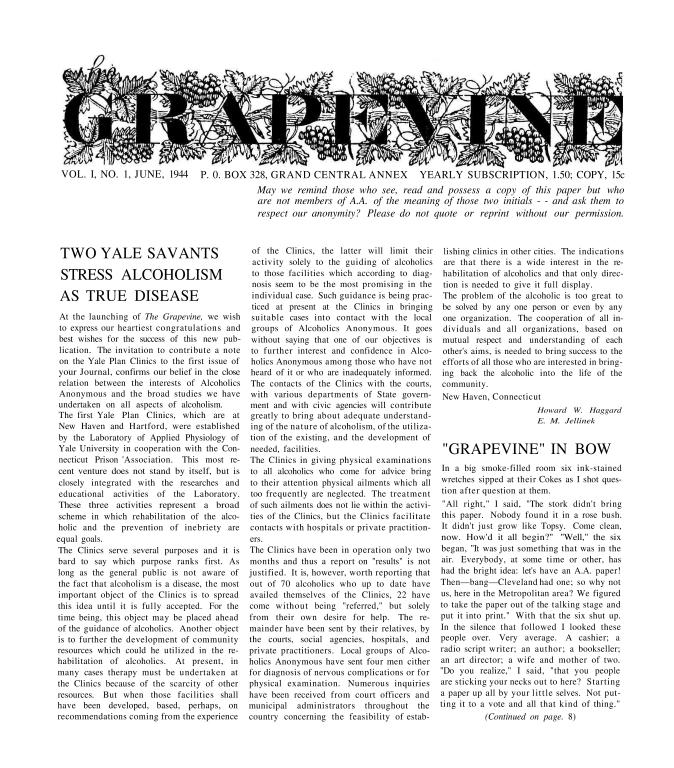
As the calendar turned to 2000, Alcoholics Anonymous crossed into its seventh decade sober, no longer worried about Y2K bugs but about how to carry the message in a new century. The AA Grapevine, born in 1944 as a mimeographed newsletter for New York intergroup, now faced the internet age. This decade would transform it from a print monthly passed around meeting rooms into a searchable, listenable, digital archive — while staying rooted in one alcoholic talking to another.
A New Millennium, Same Primary Purpose
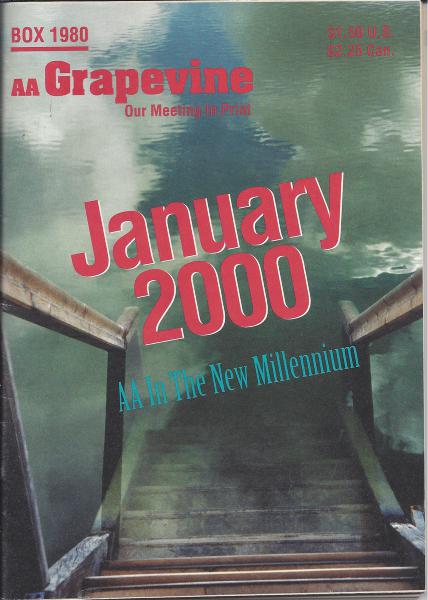
In January 2000, Grapevine launched its new website at aagrapevine.org with cover previews and subscription services that finally allowed members in remote areas — on sailboats, military posts, in rural Alaska — to order without mail delays. The January 2000 issue led with "Sobriety in the New Millennium," members asking: will the program change? The answer, issue after issue, was no. The stories remained timeless: the last drunk, the first meeting, making amends.
A pivotal literary event arrived in November 2001: the Fourth Edition of the Big Book, Alcoholics Anonymous. The first new edition in 25 years, it retained 8 classic personal stories and added 24 new ones (the archive notes 34 new in later printings as corrections were made). For the first time, the Grapevine featured stories by members who got sober in prison, who found sobriety through online sponsorship, who were openly gay, Muslim, or atheist and still AA. The December 2001 Grapevine was a special section: "The New Stories Behind the Fourth Edition," interviews with authors whose lives had been edited into the Big Book.
After 9/11: Unity in Crisis
The September 2001 attacks shook New York City, where the General Service Office and Grapevine offices sit just blocks from Ground Zero. The November 2001 Grapevine "Sobriety and Tragedy" (2001-11) and December 2001 "One Day at a Time in a Shaken World" showed how members stayed sober through mass trauma — first responders attending meetings in firehouses, newcomers sharing about fear and service. The tradition of anonymity proved vital as media sought AA members for commentary; Grapevine reprinted Bill W.'s 1946 piece on anonymity at the public level.
The wars in Afghanistan and Iraq brought a new wave of veterans to AA. Starting in 2003, Grapevine ran regular sections "Soldiers' Stories" and "PTSD and the Steps" — 2004-06 "From Combat to Sobriety," 2006-11 Veterans' Day cover with dog tags and a Big Book. Young people's meetings, long marginalized, exploded. ICYPAA — the International Conference of Young People in AA — grew from 300 to 3,000. Grapevine issues like 2002-08 "Young & Sober," 2005-03 "Twenty and Sober," and 2007-09 "Too Young?" captured members who got sober at 18, 19, 20 and stayed.
Expanding the Circle: Diversity on the Cover
The 2000s made visible what had always been true: AA is more than middle-aged white men. Covers and inside spreads featured Black members in the South sharing about segregation and double stigma, Latina women breaking machismo and alcoholism (La Viña, the Spanish-language sister magazine launched in 1996, hit its stride now), Native American talking circles integrating tradition and Steps, and members in Asia and Africa. The 2003-06 issue "In Our Own Words — Atheist, Agnostic, and Believing" was a landmark, later reprinted as a pamphlet.
La Viña grew from quarterly to bimonthly in this decade. Issues like 2003-01 celebrated Spanish-speaking groups in US prisons. Grapevine also published more by women with long-term sobriety — 20, 30, 40 years — challenging the early narrative that women didn't stay.
Conventions, CD-ROMs, and the Digital Library
Two International Conventions defined the decade: Minneapolis 2000 — 41,000 members celebrating 65 years, theme "Pass It On," with a commemorative mini issue 2000-07 — and Toronto 2005 — 50th Anniversary, 48,000+ from 65 countries, theme "I Am Responsible." Toronto introduced many members to the Grapevine Digital Archive Project. In 2005, Grapevine released the first complete CD-ROM collection: every issue from June 1944 to December 2005, fully searchable, 61 years of collective conscience on one disc. For researchers and archivists, it was revolutionary — you could finally search "resentment" across 1957.
Design evolved too. The familiar blue border introduced in 1977 remained, but interior pages moved from black-and-white to two-color to full-color photography by 2003. The March 2006 redesign introduced cleaner fonts, more white space, and a "Department of No Excuses" humor page. Online, Grapevine launched Audio Grapevine in 2006 — spoken versions of stories, for commuters and visually impaired members — and a podcast trial in 2008 that would later become the official Grapevine Podcast.
Technology Meets Tradition
By 2007-2009, the fellowship debated online meetings. Were they real AA? Grapevine's 2007-04 "The Internet — Meeting in Cyberspace" and 2008-10 "Online Sponsorship" presented both sides, always quoting Tradition Three and the long form of Tradition Four. The editorial board held firm: Grapevine is not AA, but mirrors AA. It published letters from members who stayed sober solely via AOL and Yahoo groups in remote postings, and letters from those who said only face-to-face worked.
In April 2009, Grapevine quietly released its first iPhone app — simply searchable daily quotes and story previews — the earliest mobile step toward today's app. It sold for $1.99, proceeds supporting the magazine. The December 2009 cover "The Gift of Listening" showed an iPod with earbuds next to a Big Book, signaling what was to come in the 2010s.
Why the 2000s Matter
Look at these 120 covers and you see a fellowship wrestling with inclusion without diluting its singular purpose. The language softens — fewer jokes about wives who nag, more stories about members who are trans, Muslim, veterans, atheists — but the structure holds: What it was like, what happened, what it is like now.
For the archivist, the 2000s are the bridge: the last decade where print was primary, and the first where every word was preserved digitally. Many of today's Grapevine Online articles and Podcast episodes were born as drafts in this period. The stories about 9/11, war, young people, and online sponsorship are cited at GSO every year when the question arises: "Can AA change?"
The answer from the 2000s, clear in these covers, is that AA doesn't need to change its Steps, but it must always change its doors — wider, lower, more welcoming. That is why this private archive preserves these issues for historical and educational purposes. Search below by YYYY-MM, click to enlarge, and hear the voice of a fellowship learning, again, how to pass it on in a digital century.